
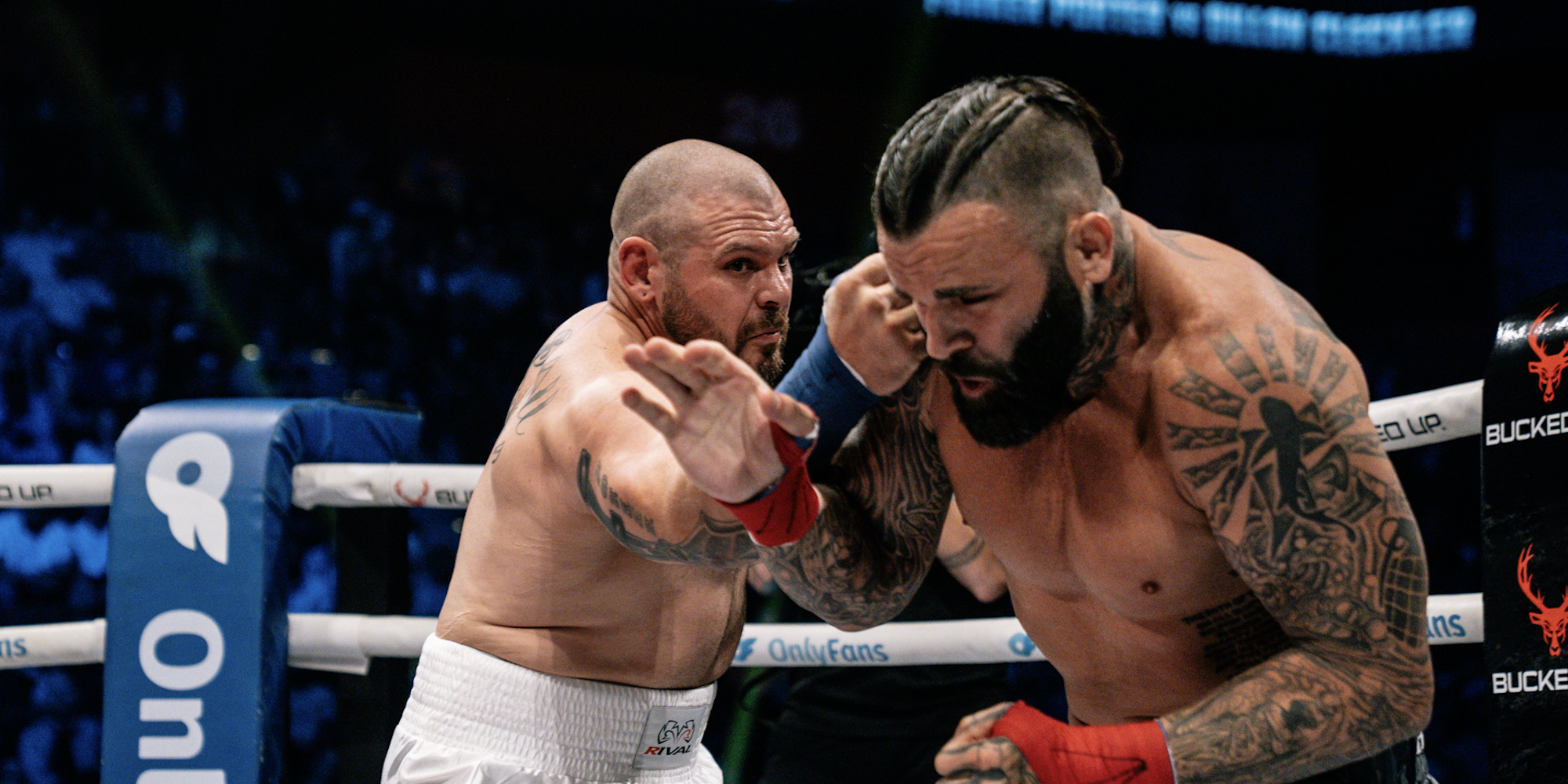

In the raw, unfiltered world of combat sports, few names resonate with the sheer power and tenacity of Parker Porter. The former UFC fighter, now a force to be reckoned with in the Bare Knuckle Fighting Championship’s heavyweight division, has sparked a debate that’s sending ripples through the combat sports community. According to Porter, bare-knuckle boxing shares a closer kinship with traditional boxing than it does with mixed martial arts (MMA).
Porter’s perspective is not just a fighter’s musing; it’s a statement that carries weight, given his experience in both the gloved and ungloved realms of combat. His transition from the octagon to the bare-knuckle ring has been nothing short of spectacular, with a trail of knockouts that underscore his punching prowess. His assertion that bare-knuckle boxing is more akin to traditional boxing than MMA is rooted in the fundamental techniques and strategies employed in the ring.
The resurgence of bare-knuckle boxing has been meteoric since its sanctioning in Wyoming in 2018. This pivotal moment marked the beginning of a new era for the sport, paving the way for subsequent legalizations across various states. The Bare Knuckle Fighting Championship (BKFC) has been at the forefront of this revival, offering a platform where fighters like Porter can showcase their skills in a format that harks back to the sport’s primordial roots.
Bare-knuckle boxing, with its emphasis on precise striking and strategic footwork, demands a level of technical proficiency that Porter argues is more aligned with traditional boxing. The absence of gloves necessitates a higher degree of accuracy and caution, as fighters must be mindful of their hand placement and the potential for injury. This nuanced approach to striking is a hallmark of boxing, where precision and timing are paramount.
Moreover, the pacing and structure of bare-knuckle bouts often mirror those of boxing matches. The ebb and flow of a bare-knuckle fight, with its strategic exchanges and tactical maneuvers, bear a striking resemblance to the chess-like dynamics of a boxing match. This is in stark contrast to the multifaceted nature of MMA, where fighters must be proficient in a variety of disciplines, including grappling and submissions.
Porter’s insights offer a fascinating glimpse into the evolving landscape of combat sports. As bare-knuckle boxing continues to carve out its niche, it’s clear that the sport is not merely a throwback to a bygone era but a legitimate and compelling discipline in its own right. For fighters like Porter, the bare-knuckle ring is a stage where the purest form of striking can be showcased, unencumbered by the trappings of modern combat sports.
In the end, Parker Porter’s journey from the UFC to the BKFC is a testament to the enduring appeal of bare-knuckle boxing. His success in the sport underscores the technical and strategic depths that make it a unique and captivating spectacle. As the debate over its place in the combat sports hierarchy continues, one thing is certain: bare-knuckle boxing is here to stay, and it’s bringing a level of excitement and authenticity that’s hard to find anywhere else.
Team_TBE Boxing
🛒 Premium Recommendations


As an Amazon Associate, we earn from qualifying purchases. Prices and availability subject to change.