
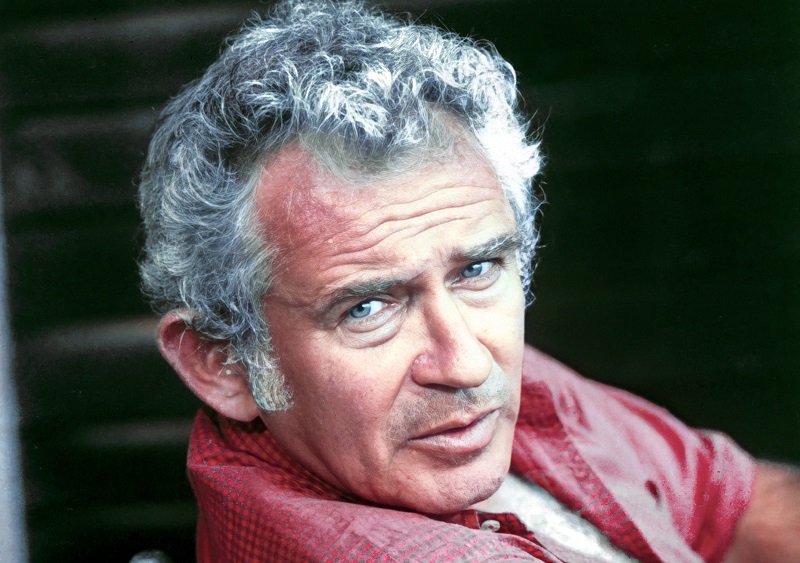

Over a century ago, the literary world welcomed a colossal figure who would leave an indelible mark on American post-war literature. Norman Mailer, a renowned novelist, public intellectual, and occasional boxer, was a force to be reckoned with. His life was a tapestry of best-selling novels, two Pulitzer Prizes, and the co-founding of a prominent publication. Those who knew him, like James Baldwin, described him as a confident, boastful, and exuberant gladiator striding through the nights of Paris. Even those who never met him, like Chuck Klosterman, were captivated by his fascinating and singular personality.
Mailer was part of a unique literary lineage that included the likes of Byron and Hemingway, where the author was also a would-be pugilist. Few writers have had their public personas so intrinsically linked to the sport of boxing as Mailer. He tirelessly nurtured this connection, seeing the world through a pugilistic lens where every intellectual engagement was a contest with a triumphant winner and an embarrassed loser. Mailer sought to prove himself as the most masculine, the strongest, the greatest—the champion.
Boxing was not just a sport to Mailer; it was an obsession that inspired some of his best writing. He was known to put up his fists and drop into a crouch whenever he met a critic or reviewer, even a friendly one. His identification with boxing was so profound that he equated the toll of writing a novel to the physical toll on a fighter’s body. In his collection of thoughts on the writing life, The Spooky Art, Mailer drew numerous parallels between writing and boxing. He compared studying writing in college courses to fighting in the amateurs, stating that both could bruise the psyche and the body. Bad reviews, to him, felt like getting knocked out, but they could also become a source of strength, much like a fighter who comes back after an early knockout to have a successful career.
Mailer saw the risks of writing as equal to those in boxing. Just as a fighter had to be ready to do physical damage, a writer had to be prepared to take chances with his readers’ lives. This unique perspective made Mailer’s writing on boxing particularly compelling. While he never wrote the great American boxing novel, his nonfiction work on the sport remains a testament to his deep connection with it.
Norman Mailer’s legacy as a literary gladiator continues to inspire and fascinate. His life and work remind us of the profound connections between the physical and intellectual realms, and the enduring appeal of the champion spirit.
Team_TBE Boxing
🛒 Premium Recommendations

Apple 2024 MacBook Pro Laptop with M4 Max, 14‑core CPU, 32‑core GPU: Built for Apple Intelligence, 16.2-inch Liquid Retina XDR Display, 36GB Unified Memory, 1TB SSD Storage; Space Black
![Apple iPhone XS Max (512GB, Silver) [Locked] + Carrier Subscription](https://m.media-amazon.com/images/I/71sITK2GB1L._AC_SL1500_.jpg)
As an Amazon Associate, we earn from qualifying purchases. Prices and availability subject to change.